.png?width=200&height=42&name=%C2%AE%20(200%20x%2042%20px).png)




BlueFrame™: Stay in Front of High-Consideration Buyers
So When They're Ready, You're the Only Name They Remember
High-Consideration Buyers Don't Buy on the First Visit.
They research for weeks or months. They open a tab, then ten more. They read reviews, compare specs, ask a contractor, talk to their spouse, watch a YouTube breakdown, and walk away to think about it.
Most of them never come back. Not because they didn’t like you, but because by the time they’re ready to act, they’ve forgotten you ever existed.
That’s the real problem with marketing for long buying cycles: it’s not that the click didn’t convert. It’s that the buyer went cold. A cheaper competitor stayed visible. By the time the purchase actually happened (60, 90, 120 days later) it happened somewhere else.
BlueFrame™ by Be Found Online® is the engagement we built to fix that. It’s a presence strategy for high-consideration brands: a coordinated system across SEO, paid media, and attribution that keeps your brand in front of the right buyers, at the right time, across the full length of a real buying journey. When they’re finally ready to act, you’re not just one option... you’re the obvious one.
The Problem Isn't the Lead. It's What Happens After.
Most agencies will tell you the answer to a long sales cycle is more leads. It isn’t.
You already have leads. You have visitors. You have form fills, content downloads, dealer-locator hits, and email signups. The problem is what happens between that first signal of interest and the moment, weeks later, when the buyer is actually ready to spend money.
In that gap, three things go wrong, often all at once:
-
Buyers Go Quiet.
- They were interested. Then life happened. They never made it back to your site... or they did, but a different brand had taken the mental space in the meantime.
-
Competitors Stay Louder Than You Do.
- A cheaper, scrappier brand keeps showing up in feeds, in search results, in AI-generated answers. Their product is worse. Their presence is better. Presence wins.
-
Your Attribution Can't See the Loss.
- The buyer doesn’t convert anywhere measurable. They just disappear. Your analytics call it a bounce. It was actually a brand that got forgotten.
This is why long-sales-cycle marketing strategy has to be built around staying-power; not just lead generation, and not just attribution. The brands that win a 90-day cycle are the ones still visible on day 89.
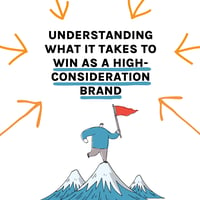
For more on why this dynamic defines the category, read Understanding What It Takes to Win as a High-Consideration Brand.

Who Is BlueFrame™ For?
BlueFrame™ was built specifically to support marketing for high-consideration brands; companies whose buyers research for weeks or months, evaluate across many touchpoints, and often convert offline.
If you’re the VP or Director of Marketing at a home improvement company, a national dealer network, an HVAC or solar brand, a premium DTC company, or any business where the path from “first search” to “final purchase” takes longer than a single session — this was built for you.

Signs BlueFrame Is the Right Fit Right Now
You’re generating interest but not closing it.
Traffic looks fine. Top-of-funnel metrics look fine. Revenue doesn’t reflect either. The gap between “interested” and “bought” is wider than it should be.
A cheaper competitor is eating your visibility.
They shouldn’t be outranking you on the questions your buyers ask before they shortlist. They are... across search, AI search, and the platforms where research actually happens.
Your cost per lead is climbing.
CAC is up. Lead quality is down. The CFO is asking what changed. You don’t have a clean explanation — and “we need more leads” doesn’t feel like the right answer anymore.
You can’t answer the revenue question.
Someone — board, CEO, CFO — has asked which campaigns drove revenue this quarter, and your honest answer is “I’m not sure.”
Your Dealer or Location Network Is a Black Box
You’re spending nationally and converting locally, but you can’t see which markets are working, which dealers are converting digital leads, or where the budget is leaking.
Your post-rebrand and your digital presence hasn’t caught up.
The brand investment was significant. The traffic, rankings, and ongoing buyer engagement didn’t move proportionally.
If any two of those describe your situation, BlueFrame is the right conversation to have.
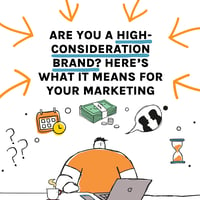
For more on whether your business fits this profile, read Are You a High-Consideration Brand?.
What BlueFrame™ Actually Is
BlueFrame is a three-phase engagement that builds, runs, and proves a staying-power system:
-
Diagnose where you’re losing buyers
-
Build the system that keeps you in front of them
-
Execute the always-on presence that turns long cycles into closed revenue.

Each phase has a defined scope, defined deliverables, and a defined success measure. You’ll know exactly what we’re doing, why we’re doing it, and what you should see at the end.
It’s also flexible. Some clients only need Phase 1 (a full diagnosis and a roadmap) to hand to their internal team or another partner. That’s BlueFrame 90. Others need the full Diagnose-Build-Execute cycle as an ongoing program. That’s BlueFrame Growth. We don’t force you into the bigger commitment if the smaller one solves your problem.
The Three Phases of BlueFrame™
Phase 1: Diagnose (AKA Find Where You're Losing Buyers)
Before we touch a campaign or change a setting, we figure out where your buying cycle is leaking. Diagnose is a structured discovery process that runs in parallel across four work streams:
- Growth Alignment Framework™. A defined set of questions and exercises that surface CEO-level goals, what success actually looks like to leadership, which parts of the buyer journey are currently unmeasured, and where buyers tend to vanish.
- SEO and AI-SEO. How visible are you during the research phase (the weeks before a buyer ever fills out a form)? We audit search rankings, content coverage of buyer-intent questions, local SEO for multi-location brands, and how AI search optimization tools like ChatGPT, Perplexity, and Google AI Overviews are (or aren’t) surfacing your brand in early-stage research.
- Paid Media. A diagnostic on every active paid channel, with a specific focus on the layer that defines staying-power: retargeting strategy for long sales cycles, cross-channel remarketing, sequenced creative for 60-to-90-day evaluation windows, and whether high intent paid search is actually showing up when buyers are in active research mode.
- Analytics and Attribution. A deep look at Google Analytics 4 (GA4), conversion definitions, multi-touch attribution models, and the online to offline attribution handoffs most setups quietly drop on the floor. This is also where we identify silent failures: the buyers who showed early interest and never came back, the touchpoints your reporting can’t see.
Not on GA4? Not a problem. Schedule a call with us to talk through our different approaches.

The output of Phase 1 is a Revenue Visibility Roadmap: a prioritized, plain-English plan of where the cycle is leaking, what to fix in what order, and how each fix maps to revenue.
It’s the document you can take into a leadership meeting and use to defend whatever you do next.
Phase 2: Build (The Staying-Power System)
Phase 2 is where we build the system that keeps you visible across the full length of a real buyer journey. That means foundational work on both sides: the visibility side and the measurement side, because one without the other doesn’t work.
On the visibility side: remarketing for long buying cycles structured around the actual length of your buyer’s decision — not a default 30-day window. Sequenced retargeting that delivers the right proof at the right stage (reviews early, comparisons mid-cycle, urgency and incentives late). We work with you to establish always-on presence across the platforms your buyers actually use during research, with creative testing built in so the messaging keeps working as buyers move through the funnel.
On the measurement side: clean GA4 attribution setup, multi-touch attribution models calibrated for long buying cycles, online-to-offline attribution pipelines so showroom and dealer data finally flows back to marketing, and executive marketing dashboards built in Looker Studio. The dashboards aren’t the deliverable — the proof they enable is. This is how we prove the staying-power strategy is working.

At the end of Phase 2, you have two things: a brand that stays in front of buyers across the full cycle, and the Revenue Visibility system that proves it.
Phase 3: Execute (The Always-On Presence Engine)
Phase 3 is the ongoing work that keeps the system running. A unique strategy for you, built on our prior two phases, we execute across areas like SEO and AI SEO services to keep you visible in research-phase queries, paid search for high ticket products to capture buyers in active research, and the retargeting and remarketing layer that keeps your brand in front of buyers across the 30, 60, 90+ days they’re evaluating you.
Execution is structured using our Rule of 3 Method™: each quarter has exactly three initiatives, three goals, and three primary deliverables.
No bloated to-do lists. No metric soup. Three things that matter, focused on outcomes you can communicate up. Quarterly strategy reviews tie everything back to the business goals we surfaced in Phase 1, with executive reporting in language a CFO actually believes.

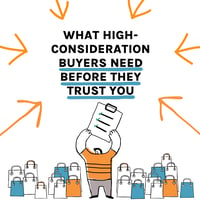
For more on the role trust and consistent presence play in high-consideration buying, read What High-Consideration Buyers Need Before They Trust you
How We Prove the System Is Working
Staying-power as a strategy only matters if you can prove it’s working. That’s where the attribution layer earns its keep — not as the headline, but as the receipt.
BlueFrame includes the full marketing attribution services stack: multi-touch attribution that credits every meaningful touchpoint across a long cycle, online-to-offline attribution that connects digital activity to showroom visits and dealer conversions, offline conversion tracking for the moments that matter most, and executive dashboards that translate it all into a revenue story. The point is to make the case (to your CFO, your board, your CEO) that the brand you’ve built is the brand buyers are remembering when they’re ready to spend.
When the attribution is clean, the staying-power strategy stops being a hypothesis. It becomes a defensible, repeatable, expandable system — and reducing CPA (Cost Per Acquisition) on the buyers who actually convert stops being a goal and starts being a number you can prove.
.png "Basis case study (featured image)")
BlueFrame™ 90 vs. BlueFrame™ Growth
Two ways to engage, depending on what you need:
BlueFrame 90
A 90-day engagement focused entirely on Phase 1: Diagnose. You get the full Growth Alignment Framework, the four-stream audit, and the Revenue Visibility Roadmap — the map of where your buying cycle is leaking and what to do about it. At the end of 90 days, you walk away with a complete plan, and the decision of who executes it (us, your internal team, or another partner) is entirely yours. Investment: $15K–$25K, project-based.
BlueFrame Growth
A six-month-plus engagement covering all three phases: Diagnose, Build, and Execute. After the initial diagnosis, we move directly into building the staying-power system and then running it as an always-on presence engine on top of clean attribution. Quarterly strategy reviews and executive reporting throughout. Average investment: $10K–$20K per month, with Phase 3 scoped after Phase 1 findings.
BlueFrame 90
A 90-day engagement focused entirely on Phase 1: Diagnose.
-
Full Growth Alignment Framework
-
Four-stream Audit
-
Revenue Visibility Roadmap, AKA the map of where your buying cycle is leaking and what to do about it.
At the end of 90 days, you walk away with a complete plan, and the decision of who executes it (us, your internal team, or another partner) is entirely yours.
Investment: $15K–$25K, project-based.
BlueFrame Growth
A six-month-plus engagement covering all three phases: Diagnose, Build, and Execute.
-
Full Growth Alignment Framework
-
Four-Stream Audit
-
Revenue Visibility Roadmap
-
After the initial diagnosis, we move directly into building the staying-power system and then running it as an always-on presence engine on top of clean attribution.
-
Quarterly strategy reviews and executive reporting throughout.
Average investment: $10K–$20K per month, with Phase 3 scoped after Phase 1 findings.

BlueFrame 90 is the right starting point if you need a clear, unbiased diagnosis before you commit to a bigger engagement, or if you have internal resources who can execute once they have a roadmap.
BlueFrame Growth is the right fit if you want a long-term partner owning the full arc from diagnosis through execution, accountable to revenue outcomes the whole way through.
What You Get Out of BlueFrame™
5 Things, Specifically:
1. A brand that stays in front of buyers across the full cycle.
Not just a campaign that runs for a quarter. A coordinated system that keeps you visible in search, in AI answers, in social feeds, and in remarketing for as long as your real buying cycle takes.
2. A measurable drop in buyers going cold.
The buyers who used to disappear between visit and purchase stay engaged — and you can see exactly which channels and creative kept them there.
3. Clean, trustworthy data that proves it.
The “wait, why are these two reports saying different things?” conversations end. The numbers hold up to scrutiny from anyone in the org.
4. Executive-ready reporting.
Dashboards and quarterly readouts written in CFO language. The kind of reporting that gets budgets approved instead of cut — and that repositions marketing from cost center to growth engine because now you can prove which one you are.
5. A roadmap tied to CEO-level goals.
Not a list of agency deliverables. A plan that connects what your marketing team does to the outcomes leadership actually cares about.
Industries Where BlueFrame™ Fits Best
BlueFrame works in any category with a long, complex buying journey and offline conversion moments. Our deepest experience is concentrated in two verticals where the staying-power problem is most acute.
Home Improvement, Home Services, & Dealer Networks
Windows, tile, flooring, fixtures, paint, cabinetry, HVAC, solar, roofing, and the dealer or showroom networks that sell them. As a home improvement marketing agency and a home services marketing agency, we know these buying cycles inside out: weeks of research, multiple in-home estimates, contractor and spouse involvement, and a dealer layer that fragments visibility across local markets.
.svg "Untitled design (1)")
We build the always-on presence and dealer marketing attribution that keeps your brand top-of-mind across the full cycle... then proves it with tracking that connects national spend to local conversion.
Premium DTC, Wellness, & High-Consideration Retail
Premium skincare, fitness systems, wellness, smart home, jewelry, and premium apparel. Subscription models and high-ticket purchases mean buyers spend weeks or months researching, and the brand that stays present is the brand that converts.

We build the content presence, remarketing for long buying cycles, and complex buying journey attribution that turns long research into closed revenue.
Why BFO Built BlueFrame™
Generalist agencies don’t fix this because they’re not set up to. They sell channels (SEO, paid, social) and the channel team optimizes for the channel’s metrics. Nobody owns the question of whether the buyer is still with you on day 60. Answering that question would require integrating across all of them and connecting to the offline outcomes that most platforms can’t see.
.png "logo with registered trademark (600 x 100 px)")
Frequently Asked Questions About High-Consideration Brand Marketing
What does BlueFrame actually do?
BlueFrame builds and runs a staying-power system for high-consideration brands: a coordinated program across SEO, AI search, paid media, retargeting, and attribution that keeps your brand in front of buyers across the full length of a long buying cycle. When the buyer is finally ready to act, you’re the brand they remember. The attribution layer is included so you can prove the system is working in language your CFO and board will believe.
How does BlueFrame handle long sales cycles?
A long sales cycle marketing strategy needs three things working together: visibility during the research phase, sustained presence across the full evaluation window, and attribution that can see what’s working over a 60-to-120-day journey. BlueFrame coordinates all three. Retargeting and remarketing are sequenced to the actual length of your buyer’s decision, not a default 30-day window. Content covers every stage of the journey, from “what are my options” to “who should I choose.” Attribution credits the touchpoints that actually moved the buyer, not just the last click.
Why does retargeting matter so much for high-consideration brands?
Because the gap between first interest and final purchase is where most brands lose the sale. A buyer who visits your site, reads three pages, and leaves to think about it is a buyer at risk of forgetting you exist. Retargeting strategy for long sales cycles, done right (with sequenced creative and proper window length) keeps your brand visible across the weeks or months it takes for the buyer to be ready. Done wrong (generic ads for 30 days, then nothing), it’s a budget leak. BlueFrame treats it as the foundational layer it actually is.
How long does BlueFrame take?
BlueFrame 90 is a 90-day engagement covering full diagnosis and roadmap. BlueFrame Growth is a six-month-plus engagement covering diagnosis, system build, and ongoing execution. Most clients see the first meaningful wins: buyers staying engaged through the cycle, attribution surfacing what was previously invisible... within 60 days of starting.
How much does BlueFrame cost?
BlueFrame 90 is project-based at $15K–$25K. BlueFrame Growth is an average monthly retainer of $10K–$20K, with the Phase 3 (Execute) component scoped after Phase 1 findings determine what’s actually needed. We size the engagement to the problem, we don’t force a package that overshoots what you need.
Do I have to commit to the full engagement, or can I start with just a diagnosis?
You can start with just a diagnosis. BlueFrame 90 is designed specifically for clients who want clarity before committing to a longer program. At the end of 90 days you have a complete roadmap and full ownership of what happens next, including the option to execute it yourself, with your existing partners, or to continue with BFO into BlueFrame Growth. There’s no obligation to continue.
Does BlueFrame help with AI search visibility?
Yes. AI search tools (ChatGPT, Perplexity, Google AI Overviews) are increasingly where high-consideration buyers start research. Staying visible there is part of the staying-power system. The SEO and AI-SEO audit in Phase 1 evaluates how your brand surfaces in AI-generated answers, and the execution work in Phase 3 includes generative engine optimization (GEO) and answer engine optimization (AEO) for clients who choose ongoing execution.
What industries does BlueFrame work best for?
BlueFrame was built for high-consideration brands: categories where the buying journey is long, multi-touchpoint, and often offline at the conversion moment. It works particularly well for home building and improvement (windows, tile, flooring, fixtures, paint, dealer networks), home services (HVAC, solar, roofing), and high-consideration DTC (premium skincare, fitness systems, wellness, smart home, jewelry, premium apparel). Any business with a buyer journey measured in weeks rather than minutes is a candidate.
Start With a Diagnosis Call
The first conversation is free and short (just 30 minutes). We’ll ask about your buying cycle, where you suspect you’re losing buyers, and what triggered you to look at this now. By the end of the call, you’ll know whether BlueFrame is the right fit, whether something smaller (a standalone audit or a point solution) makes more sense, or whether your situation is genuinely already in good shape and you don’t need us.
No pitch deck. No package. Just a diagnosis of what’s actually broken and what to do about it.