.png?width=200&height=42&name=%C2%AE%20(200%20x%2042%20px).png)




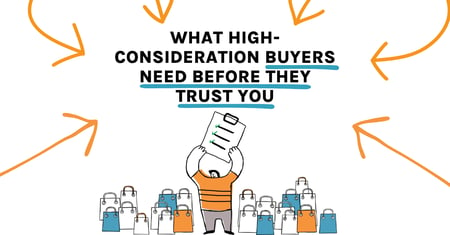
Some decisions are easy. You click, you buy, you move on. No overthinking required.
And then there are the decisions that linger.
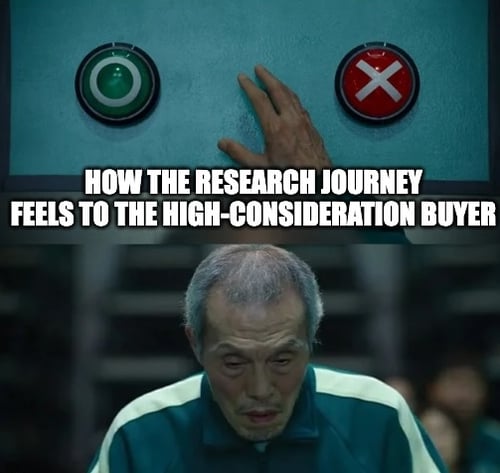
The ones that come with spreadsheets and stakeholder opinions. The ones where you’re not just comparing options but actively trying to avoid making the wrong call.
That’s where high-consideration buyers live.
And before anyone signs on the dotted line, they’re asking this question: Do I trust this enough to move forward?
Unfortunately, that trust isn’t built in a single interaction (wouldn’t that be nice???). It’s earned gradually, across every piece of information and signal your brand throws out into the world.
So what builds that trust in the first place? Let’s break down what high-consideration buyers need to see before they’re ready to say yes.
Clarity Before Complexity
High-consideration products aren’t exactly light reading.
There’s usually some level of complexity involved, and that’s normal. But from a buyer’s perspective, the goal isn’t to decode your offering. It’s to understand what you do and whether it’s worth exploring.
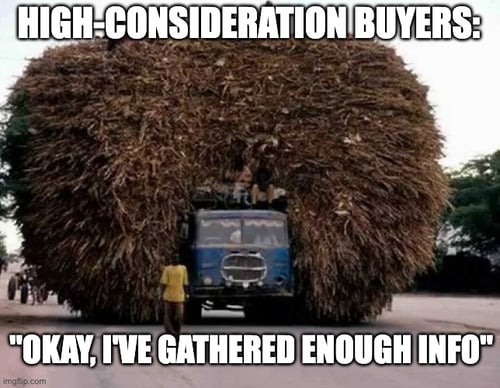
People don’t trust what they can’t quite wrap their heads around.
When someone first lands on your site or starts digging in, they’re looking for a clear starting point:
- What is this?
- How does it work?
- Is this something I should keep looking at?
If those answers come easily, they’ll stick around. If not, they’ll drift.
No, this doesn’t mean stripping away what makes you stand out. But it does mean making things feel easier to follow, aka plain language, outlining your process, and putting important info where people can find it.
Proof You’ve Done This Before
Once buyers understand what you do, the next question is pretty natural: Okay…but have you done this successfully before?

In high-consideration decisions, no one wants to feel like the test case.
This is where proof does some heavy lifting. Things like:
- Case studies showing what changed and why it mattered
- Testimonials that sound like actual humans (not marketing robots)
- Specific results that help people picture what success could look like
The more concrete, the better.
Vague statements like “we drive results” don’t give buyers much to hold onto. But a clear story about how you helped a company solve a problem similar to theirs? That sticks.
Relevance to Their Specific Situation
At a certain point, buyers stop wondering if something works and instead wonder if it’ll work for them.
Enter, relevance.
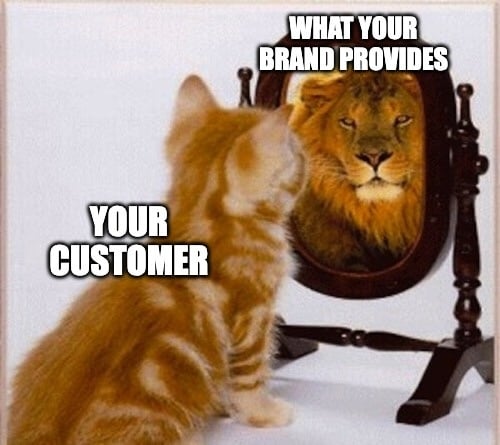
Even the best case studies and messaging can fall flat if they’re too broad. Buyers want to see themselves in what you’re saying.
So if everything’s generic, it’s harder to make that connection.
Content reflecting their specific situation might look like:
- Examples from their industry or similar companies
- Use cases that mirror the problems they’re dealing with
- Language that sounds like how they talk about those problems internally
This should feel close enough that buyers can see something is relevant to them.
A Defensible Value Story
This is the point where things get very real, very fast.
Up until now, a buyer might be exploring and getting a feel for their options. But once your solution starts looking like a serious contender, the conversation shifts.
Now it’s about the investment.

Not just the price, but what they’re getting in return, and how confidently they can stand behind that decision. This is where your value story needs to hold up.
Features are part of it, sure. But what buyers really care about is what those features turn into.
Think: Less manual work, more revenue, a smoother day-to-day.
The clearer you can make that connection, the easier it is for someone to get on board. And just as importantly, it gives them something solid to bring back to their team.
Consistency Across Every Touchpoint
Small inconsistencies can shake up trust. Like a message on your website that sounds one way, then a sales call that takes a slightly different angle.
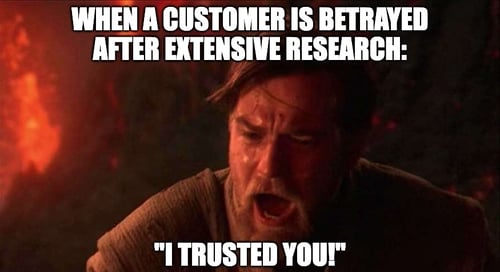
Nothing dramatic. Just enough to make someone pause.
In high-consideration decisions, those little pauses add up.
Buyers are moving across a lot of touchpoints as they evaluate. When everything feels connected, it creates a sense of rhythm.
This helps buyers relax into the process, which makes trusting you feel like a much easier next step.
Access to Real Humans
There’s usually a moment where the research phase starts to feel…excessive.
The information is all technically helpful, but somehow, the decision still seems out of reach.
That’s when a real conversation starts to sound like a much better use of time.

High-consideration buyers want a way to talk it through and ask the oddly specific questions.
When someone on your team can step in and help connect the dots, everything becomes more manageable. The process feels less like sorting through information and more like making a decision with some help from a friend.
Common Trust Killers
Sadly, trust can unravel a lot faster than it can come together.
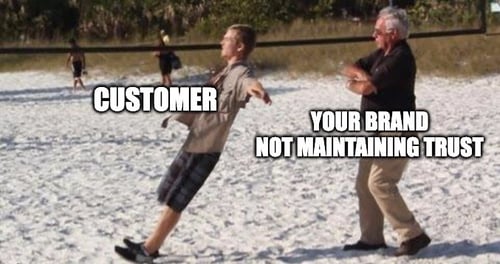
A few common trust killers we see:
- Vague, overly-polished language that sounds nice but doesn’t say much
- Important info that takes way too much digging to find
- Slow follow-ups that make the whole experience more disjointed
- Messaging that shifts depending on where someone is in the journey
- Testimonials or proof points that feel overly scripted or generic
None of these are dealbreakers on their own.
But together, they can chip away at confidence, and a small dip in confidence can be enough to stall things out.
So, What Does This Mean for Your Marketing?
All of this comes down to one thing: your marketing’s job is to build confidence.
High-consideration buyers aren’t looking for a clever hook or a perfectly timed ad. They’re looking for a clear path forward.

Instead of trying to impress, your marketing should look more like:
- Making complex things easier to understand
- Answering the questions buyers haven’t asked yet
- Reinforcing the same core message across every touchpoint
- Showing real proof instead of relying on broad claims
The brands that do this well tend to feel less like marketers and more like steady guides.
Trust Is Earned in the Details
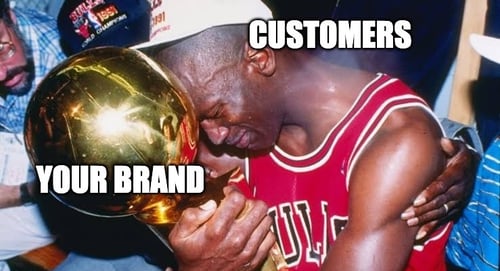
High-consideration decisions come with a little more weight, which is why trust builds through the small things.
The way you explain your offering and the consistency across every interaction. It all adds up to how confident someone feels choosing you over someone else.
If you want to keep that momentum going, we’ve got more where this came from. Check out our other high-consideration content for deeper dives and practical ideas:
- Are You a High-Consideration Brand? Here’s What It Means for Your Marketing
- Understanding What It Takes to Win as a High-Consideration Brand
And if you’d rather not figure it out solo, BFO’s here. We’d love to dig in with you!


SUBSCRIBE TO OUR BLOG
Stay up to date with the latest industry best practices in digital marketing!
















.png?width=339&height=179&name=Webinar%20Banner%20(1).png)

.png?width=339&height=179&name=July%20Webinar%20(Newsletter).png)

.png?width=339&height=179&name=Webinar%20Banner-April-02%20(1).png)
%20(4).png?width=339&height=179&name=Webinar%20Banner-May-02%20(1)%20(4).png)




.png?width=339&height=179&name=March%202023%20Webinar%20Ad%20(autoresponder).png)


.svg)
.svg)
.svg)
%20(1).svg)
.svg)
.svg)

.png?width=339&height=179&name=2025%20Paid%20Media%20(1200%20x%20628%20px).png)












































.png?width=339&height=179&name=2026%20Paid%20Media%20Ad%20Specs%20(Twitter%20Post).png)

.png?width=339&height=179&name=1%20(3).png)