.png?width=200&height=42&name=%C2%AE%20(200%20x%2042%20px).png)




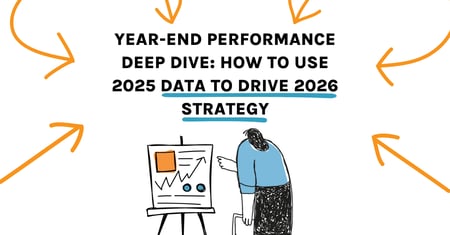
Between AI updates dropping like weekly episodes and platforms reinventing themselves mid-quarter, this year gave marketers a lot of data and not nearly enough clarity.
And now here we are with planning season in full swing!
So here’s the big question: How do you make sense of everything that happened in 2025 and turn it into a smarter 2026 strategy?
Spoiler: You don’t need more metrics. You need better patterns.
Year-end performance is about understanding why it happened and where your biggest opportunities are hiding.
We’re breaking down how to read your 2025 data to turn insights into decisions you can trust in 2026.
Zoom Out Before You Zoom In
One of the biggest mistakes teams make at year-end = jumping straight into channel metrics, dashboards, or whatever campaign had the highest ROAS last month.
But 2025 was a context-heavy year (AI rollouts, attribution changes, shifting consumer behavior, disappearing cookies), so looking at isolated metrics won’t tell you the full story.

Before digging into the numbers, step back and ask: What changed this year and why?
Start with the big-picture view:
- How did your budget shift from Q1 → Q4?
- Did you launch new channels or pause old ones?
- Did your creative volume increase, decrease, or stagnate?
- How did your audience strategy evolve?
Context transforms data from interesting to instructional.
You’re not just looking for what increased or decreased. You’re looking for effort vs. outcome:
- Where did you spend the most time?
- Where did you spend the most money?
- And did those two things correlate with results?
Once you’ve mapped the macro view, then you can drill into campaign-level performance with a much clearer sense of what mattered.
Find the Real Drivers Behind the Numbers
Next, it’s time to dig into what drove performance in 2025 instead of what just looked good in a dashboard. Because, let’s be honest: some campaigns look great on paper but do very little for real revenue, while others quietly carry the entire quarter.
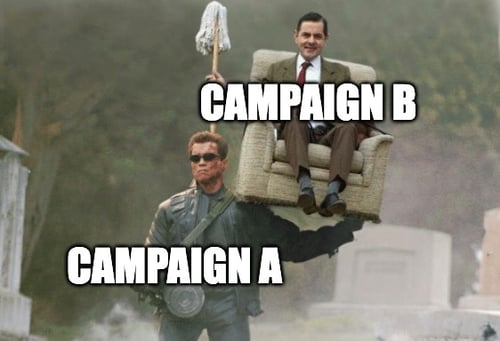
Start by looking at which channels contributed to pipeline or revenue. A low CPA isn’t impressive if the leads never convert, and an “expensive” channel might be your most reliable closer. Follow the impact, not the illusion.
Then look for campaign themes that repeated themselves:
- Did PMax reliably pick up bottom-funnel conversions?
- Did Meta warm up audiences that Google later closed?
- Did your LinkedIn video campaigns help lift branded search?
These are the structural signals that should guide 2026 planning.
Creative patterns matter too. Which messages or formats performed well everywhere? Maybe your UGC-style videos consistently beat polished assets, or a certain value prop kept showing up in your top performers.
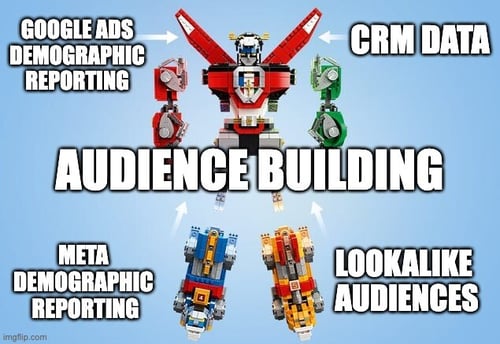
And finally, look at the audiences that produced the highest-quality results. Not the cheapest or the biggest, but the ones that reliably generated strong conversions or higher AOV. These are the audiences worth prioritizing and expanding next year.
Audit Attribution & Measurement Gaps
Before you use 2025 data to make any big 2026 moves, you need to make sure the numbers you’re relying on are telling the truth. With cookie loss, privacy changes, and constant platform updates, this year created more measurement blind spots than most teams realize.
Start by checking the essentials. Make sure your core conversions are firing everywhere they should, GA4 events are mapped correctly, and nothing broke during a site refresh or landing page update. A surprising amount of performance dips are really just tracking dips.
Then look at how your platforms are reporting compared to one another.
You don’t need perfect alignment, but you do need consistency. If Google, Meta, and GA4 are telling wildly different stories, pause and investigate:
- Are you using auto-tagging everywhere you can?
- Are offline conversions or CRM events being imported reliably?
- Are enhanced conversions or CAPI set up correctly?
- Did attribution windows or models change mid-year?
And finally, look at where your data feels the fuzziest. If lead quality drops off after platform-reported conversion events, or your CRM isn’t matching what Meta swears it’s driving, tighten that connection before you start forecasting.
The cleaner your measurement is at year-end, the more confident your 2026 strategy becomes.
Identify Efficiency & Wasted Spend
Once your data is clean and your patterns are clear, it’s time for the part everyone loves and hates in equal measure: figuring out where your money worked and where it quietly evaporated.

Start by reviewing your channels and campaigns through a single lens: Did this investment drive meaningful outcomes, or did it just generate activity?
Look at efficiency from multiple angles, not just CPA or ROAS. For example:
- Which channels consistently drove high-quality leads or revenue?
- Where did you see strong performance early in the year that faded by Q3?
- Did “cheaper” channels actually deliver weaker downstream results?
- Were you overspending on audiences that saturated quickly?
This is also the moment to find your biggest “surprise performers”, aka the channels or creative formats that quietly pulled more weight than expected. These often become your highest ROI bets for 2026.
As you assess, try categorizing each channel or campaign into three groups:
- Core: reliable performers you should maintain or scale
- Scalable: emerging areas that showed promise and deserve testing budget
- Replaceable: high-cost, low-impact efforts that didn’t justify their spend
This simple framework helps turn a year of chaotic results into a clear, intentional plan.
Connect the Dots Between Channels
In 2025, one truth became impossible to ignore: no channel operates in a vacuum anymore. Your Meta campaigns impact your Google conversions. Your LinkedIn video views influence branded search. Your Demand Gen campaigns warm up audiences that PMax later closes.
If you only evaluate channels in isolation, you’ll undervalue the ones doing the heavy lifting behind the scenes.
Start by looking at assists, not just last-click wins.
Where did awareness channels boost engagement, even if they didn’t generate immediate conversions? Where did retargeting thrive only after a strong top-of-funnel push?
A few patterns to look for:
- Spikes in branded search after big paid social campaigns
- Higher PMax efficiency when Demand Gen or Meta is active
- Stronger lead quality when LinkedIn warms audiences before Google picks them up
- Lower CPAs when short-form video drives consideration
- Cross-platform creative themes boosting performance everywhere
Plan 2026 like an interconnected system, not a set of individual channels fighting for budget. When you understand how each touchpoint influences the next, you’ll have a much easier time allocating dollars.
Align Your Team Around the Insights
You can spot every pattern and map out the perfect 2026 plan, but if the team isn’t aligned on what it means or what happens next, none of it sticks.

This is the part where data becomes a story.
Bring your teams together (paid, SEO, content, analytics, even sales) and walk through the year not as a report, but as a narrative:
- Here’s what changed.
- Here’s what worked.
- Here’s what didn’t.
- Here’s what we’re doing next.
Keep it simple and actionable. Show the cause-and-effect behind your biggest wins. Make space for questions, collaboration, and “what if we tried…” ideas.
Dashboards are helpful. Alignment is powerful.
Bringing It All Together for 2026
A year’s worth of data is great…but only if it does something for you. When you dig into what drove performance, clean up the messy measurement stuff, and get your team aligned, 2025 stops being a pile of dashboards and starts becoming your playbook for 2026.
And if you want a partner who can help you make sense of the chaos, our team is ready when you are. Even better: now through the end of the year, you can get 26% off any new service when you sign on.
Let’s turn all that data into something you can actually use!


SUBSCRIBE TO OUR BLOG
Stay up to date with the latest industry best practices in digital marketing!














.png?width=339&height=179&name=Webinar%20Banner%20(1).png)


.png?width=339&height=179&name=July%20Webinar%20(Newsletter).png)
.png?width=339&height=179&name=Webinar%20Banner-April-02%20(1).png)
%20(4).png?width=339&height=179&name=Webinar%20Banner-May-02%20(1)%20(4).png)


.png?width=339&height=179&name=March%202023%20Webinar%20Ad%20(autoresponder).png)





.svg)
.svg)
.svg)
%20(1).svg)
.svg)
.svg)

.png?width=339&height=179&name=2025%20Paid%20Media%20(1200%20x%20628%20px).png)









































.png?width=339&height=179&name=2026%20Paid%20Media%20Ad%20Specs%20(Twitter%20Post).png)

.png?width=339&height=179&name=1%20(3).png)