.png?width=200&height=42&name=%C2%AE%20(200%20x%2042%20px).png)




February 05, 2026
14 Minute Read
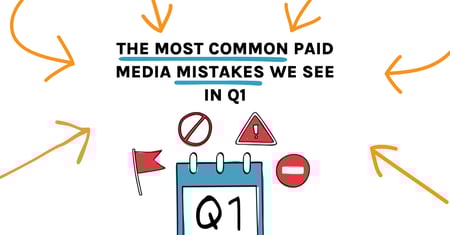
Q1 has a lot of energy. Fresh budgets. New plans. Everyone’s ready to get moving.
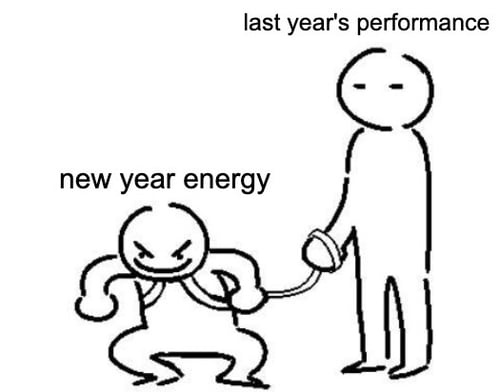
And somehow, this is also when a lot of paid media strategies start picking up a few unnecessary bruises.
Not because teams don’t know what they’re doing. It’s usually a mix of carrying a few assumptions over from last year and trying to make early wins happen. Understandable. But also very easy to get off course.
We see the same patterns show up every year across accounts of all shapes and sizes—though none that aren’t easy to reverse, especially when you catch them early.
Below, we’re breaking down the most common paid media mistakes we see in Q1 and how to avoid them, so you can build momentum without creating extra cleanup work by spring.
Mistake #1: Spending Faster Instead of Smarter
New budgets have a funny effect on ad accounts. Suddenly, everything feels possible. There’s a lot more “let’s just see what happens.”
And sometimes, that works. But a lot of the time, it just makes the problems louder.
One of the most common Q1 moves we see is scaling before things are ready. Campaigns that were kinda sorta working in December suddenly get a January glow-up. Spend goes up, and then everyone’s scrambling to optimize because nobody wants to be the one slowing things down.
The thing is, when you turn up the budget, you turn up everything... good and bad. If creative is tired, you’ll feel it faster. If targeting isn’t dialed in, waste grows faster.
A smoother way to grow is more “let’s be smart about this” and less “YOLO, full send.” That usually looks like:
- Making sure performance is stable before pushing spend
- Increasing budgets in steps, not leaps
- Letting campaigns collect enough data before making big changes
- Using early Q1 to learn, so late Q1 is easier to scale
Strong starts don’t come from flooring it on day one. They come from knowing what’s working, then giving those things more room to run.
Think of it less like hitting the gas and more like finding the right gear.
Mistake #2: Carrying Last Year’s Strategy Forward
When something works, the natural reaction is to keep it going. Maybe even give it a little more budget and see how far it can run.
But platforms change, and audiences get tired. What crushed it in Q3 doesn’t always behave the same way in Q1.
We see a lot of accounts start the new year on autopilot. Performance might still look okay, but small things start shifting under the surface: engagement dips, costs creep up, and nothing new is being tested.
That’s your cue the strategy needs a tune-up.
A smarter reset is about asking a few honest questions:
- Is this channel still doing real work, or just riding past success?
- Are these audiences still growing, or getting a little tapped out?
- Are people still responding to the creative, or just scrolling past it?
- Are we counting on seasonal behavior that might not show up again?
The strongest teams treat last year’s wins as a starting point, then keep evolving instead of waiting for performance to force the issue.
Mistake #3: Treating All Channels the Same
One of the most common Q1 mistakes starts in a meeting.
Someone pulls up a dashboard. A few numbers get compared. And suddenly it’s, “Why does Search look better than Meta?” or “LinkedIn is so expensive, should we cut it?”
And just like that, decisions are made based on metrics that were never meant to compete with each other.
The thing is, different channels are doing different jobs. Search is there to catch people who are already looking. Paid social helps people discover and warm up to your brand. Video sticks in people’s heads so they remember you later. They’re not supposed to perform the same way, and that’s kind of the point.
But we still see this all the time: video getting judged on click-through rate, social getting cut because it’s not converting like search, or a channel getting labeled a “loser” before it’s had a real chance to do what it’s good at. (Rude.)
A much better approach is to decide upfront what your platforms are there to do and measure them based on that job. If a platform is meant to build awareness, look at engagement and how it supports what happens later. If it’s meant to capture demand, then yes, volume matters more.
Everything starts working together when each channel plays its part. Plus, budgets make more sense, and reporting gets cleaner.
(Your video campaigns will, in fact, be very grateful.)
Mistake #4: Letting Creative Lag Behind Optimization
Slipping performance sometimes leads to pressing the big red panic button, nudging your budget and bids.
Meanwhile, the creative has been running since Thanksgiving.
Creative fatigue is one of the most common (and overlooked!) reasons performance is wishy washy in Q1. Audiences have already seen tons of ads over the holidays, and anything that feels repetitive gets tuned out fast. Unfortunately, no amount of optimization ~magic~ can make stale content feel fresh again.
Here’s how this shows up in accounts:
|
What You See in Performance |
What’s Probably Happening |
What to Do About It |
|
Engagement rates slowly declining |
Audiences have seen the same assets too many times |
Refresh hooks, visuals, or formats |
|
CPAs creeping up without major targeting changes |
Creative relevance is dropping |
Introduce new messaging angles or offers |
|
Frequency climbing steadily |
Audience saturation is setting in |
Rotate assets more frequently or expand creative volume |
|
Lots of bid and budget changes with little impact |
You’re optimizing delivery instead of demand |
Shift focus back to creative testing |
|
Strong early results that fade quickly |
Winning creative wasn’t refreshed fast enough |
Build a proactive refresh cadence |
The pattern is simple: when creative stalls, optimization hits a ceiling.
A healthier approach treats creative as a performance lever. That means testing more than just small copy tweaks, and letting performance data guide what you produce next.
If your account feels like it’s constantly being adjusted but never really improving, the issue isn’t the algorithm. It’s the ads.
Mistake #5: Ignoring Measurement Gaps Until They Hurt
Measurement problems are sneaky. They don’t show up with flashing warning lights. They show up as little “huh, that’s weird” moments.
In Q1, it’s easy to shrug those off. Everyone’s busy launching new campaigns and chasing early goals. So tracking fixes get added to a spring cleaning list.
And then before you know it, it’s April.
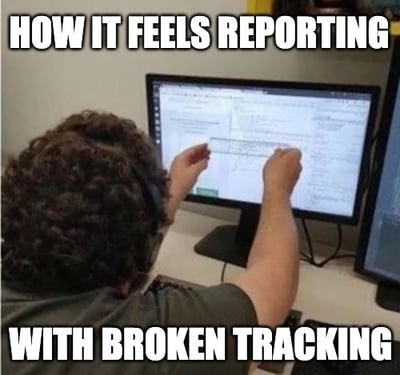
By that point, budgets are higher, and suddenly everyone’s trying to make important decisions using data they don’t fully trust. Fun!
This usually shows up in familiar ways:
- Platform numbers don’t match GA4
- Leads look great on paper, but not so great in real life
- Offline sales aren’t tied back to ads
- Attribution models quietly change, and no one notices until a report looks…different
None of this breaks performance overnight. But it definitely bends the truth about what’s working and what’s not.
Fortunately, you don’t need perfect tracking to be in a better spot. You just need to be intentional early.
A quick Q1 check on conversion tracking, attribution settings, CRM connections, and reporting alignment can save you a lot of headaches later. Because trusting your data makes everything else easier.
Mistake #6: Chasing Shiny Objects
New year, new “you-have-to-try-this!!!” posts in your feed.
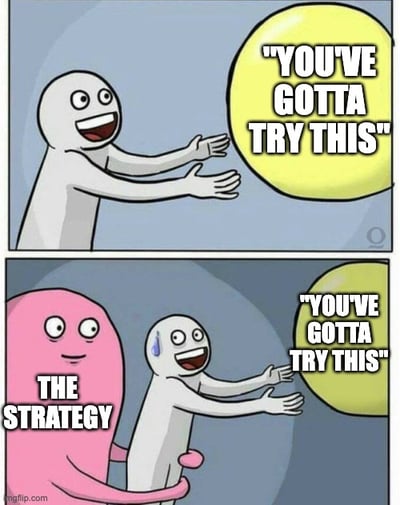
Q1 is prime season for shiny-object syndrome. But if you’re not careful, your media plan will start looking like a buffet instead of a strategy.
We typically see this mistake show up as:
- Launching too many new channels or formats at once
- Spreading budget so thin that nothing reaches meaningful scale
- Running tests without clear success criteria
- Jumping to the next idea before learning from the last one
- Treating experimentation like impulse shopping instead of strategy
The result? A lot of activity and very little clarity.
A smarter approach is focused experimentation. That means choosing a small number of intentional tests tied to business questions, giving them enough runway to document what happened.
The goal isn’t to avoid new things but to make sure new things teach you something useful.
How to Avoid These Mistakes
Use this checklist as a quick gut-check as you plan and optimize in Q1:
Strategy & Goals
 Are our paid media goals clearly tied to real business outcomes?
 Do we know what each channel’s role is in the funnel? Are we pressure-testing last year’s assumptions instead of running on autopilot?
Budget & Scaling
Are we scaling budgets based on proven performance, not calendar timing? Do we have room in the budget for learning and testing? Are we ramping intentionally instead of all at once?
Creative & Testing
Do we have a plan for refreshing creative before fatigue hits? Are we testing meaningful variations rather than tiny tweaks? Are creative insights influencing what we build next?
Measurement & Reporting
Are our primary conversions tracking correctly across platforms? Do we understand where platform data and GA4 differ and why? Are offline or CRM signals being captured where possible?Experimentation Discipline
Are tests tied to clear hypotheses and success metrics? Are we giving experiments enough runway to learn something useful? Are we documenting results and applying the learnings?
If you can confidently check most of these boxes, you’re setting yourself up for a much smoother Q1 and fewer “how the heck did this happen?” moments later in the year.
And if a few boxes feel…aspirational? That’s normal. The checklist is just here to give you some direction.
A Smarter Q1 Starts With Better Habits
Q1 tends to set the vibe for the rest of the year. What you fix early adds up faster than it feels in the moment.
Avoiding these mistakes just means being thoughtful with how you build momentum, so you’re not stuck untangling things later.
And if you’d rather not play paid media detective on your own, BFO’s here to help. You can schedule a time to chat or swing by our Resources page for more paid media tips and guides.
Smart paid media isn’t luck. It’s paying attention, making smart moves, and knowing when it’s worth calling in some backup!


SUBSCRIBE TO OUR BLOG
Stay up to date with the latest industry best practices in digital marketing!













.png?width=339&height=179&name=Webinar%20Banner%20(1).png)


.png?width=339&height=179&name=July%20Webinar%20(Newsletter).png)
.png?width=339&height=179&name=Webinar%20Banner-April-02%20(1).png)
%20(4).png?width=339&height=179&name=Webinar%20Banner-May-02%20(1)%20(4).png)


.png?width=339&height=179&name=March%202023%20Webinar%20Ad%20(autoresponder).png)


.svg)
.svg)
.svg)
%20(1).svg)
.svg)
.svg)

.png?width=339&height=179&name=2025%20Paid%20Media%20(1200%20x%20628%20px).png)









































.png?width=339&height=179&name=2026%20Paid%20Media%20Ad%20Specs%20(Twitter%20Post).png)

.png?width=339&height=179&name=1%20(3).png)