.png?width=200&height=42&name=%C2%AE%20(200%20x%2042%20px).png)




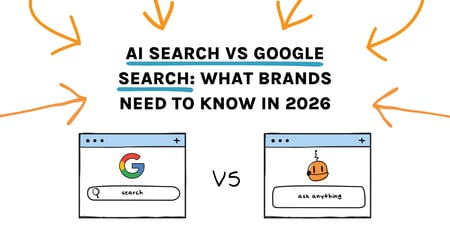
Not long ago, “search” meant opening Google, typing a question, and bouncing between tabs until something clicked.
Now, you ask a question and get a full answer back instantly. No digging required.
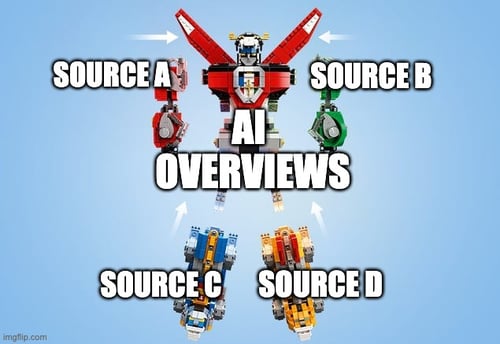
And if you’re a brand, that shift can feel…different.
Because instead of competing for clicks on a page, you’re now competing to be included in a single, summarized response.
So what’s happening here? Search is splitting.
You don’t have to pick one over another, but you do have to understand how both shape visibility. So let’s get into that.

The Core Difference
At a basic level, the difference comes down to this: Google gives you options, AI gives you an answer.
Google: A List of Possibilities
When someone searches on Google, they’re getting a menu.
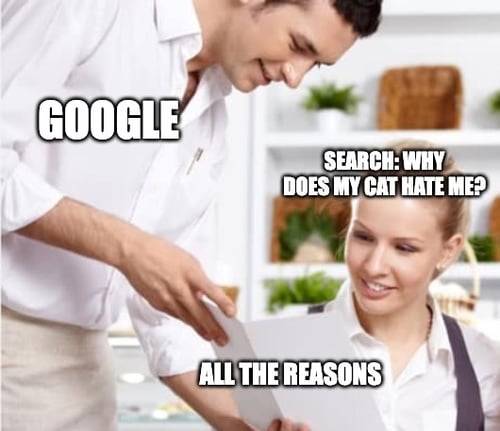
Links, ads, snippets, maybe a featured result if they’re lucky, but ultimately, it’s on the user to do the work. They click, compare, skim, open three more tabs…you know the drill.
For brands, this means visibility is spread out. You’re competing to get the click, not necessarily to be the final word.
AI Search: A Synthesized Answer
AI search flips that experience.
Instead of a list, you get a response that pulls everything together into one answer. It’s faster, and sometimes a little too confident.
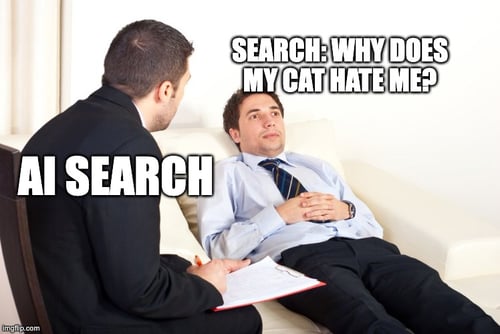
And instead of ten chances to show up, there might only be a handful of mentions or none at all.
Recap:
- In Google, visibility is about showing up somewhere in the mix.
- In AI search, visibility is about being included in the answer itself.
That’s a much smaller stage and a much higher bar.
How Brands Show Up in Each Environment
If the experience is different, it makes sense that how brands show up is different too.
In Google Search
Google runs on a pretty familiar playbook.
Your visibility is influenced by things like:
- Content quality and relevance
- Backlinks and authority
- Technical SEO and site performance
In other words, you’re competing for a position. The higher you rank, the more likely someone is to click.
It’s a system you can actively optimize for, test, and improve over time.
In AI Search
AI doesn’t “rank” brands the same way. It references them.

And those references tend to come from patterns like:
- How often your brand shows up in credible sources
- How you’re tied to a specific use case
- Whether there’s general agreement about what you’re good at
It’s less about your website alone, and more about how your brand exists across the internet.
As we covered earlier, AI isn’t discovering brands from scratch. Instead, it’s reflecting what’s been reinforced.
One environment rewards visibility you can actively climb toward. The other depends on whether your brand has become part of the broader conversation.
That’s a subtle shift, but it changes where the work needs to happen.
User Behavior Is Shifting
Ever heard someone say no one uses Google anymore? We’re here to inform you that Google is doing just fine.
What’s happening is less dramatic and more interesting.
When Google Still Wins
Google is still the go-to when someone wants to poke around a bit.

Think:
- Comparing multiple options
- Digging into reviews
- Double-checking details
- Opening way too many tabs and pretending that’s a system
It’s built for exploration and people who want to see what’s out there before landing somewhere. For all of our high-consideration brand friends, this should sound familiar.
When AI Search Steps In
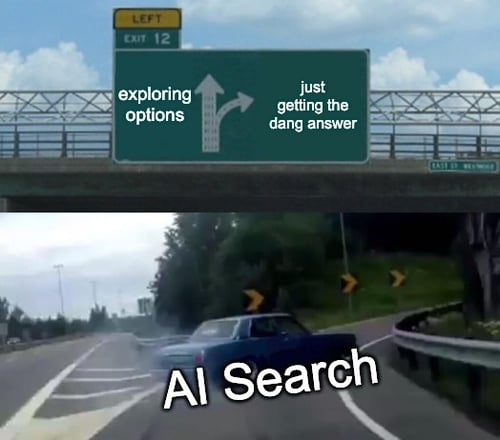
AI shines when someone wants to skip the wandering and get straight to the point.
Think:
- “Just explain this to me”
- “What are the best options?”
- “Where do I even start?”
It compresses the early stages of research into something digestible. Less scrolling, more summarizing.
How to Stay Visible in Both Worlds
Alright, so now the obvious question: What should you do with all of this?
Fortunately, you don’t need to build two completely separate strategies and double your workload. It’s more about tightening what you’re doing so it works in both environments.
1. Get Painfully Clear on What You’re Known For
If someone asked, “When would I use this brand?”, would the answer be obvious?
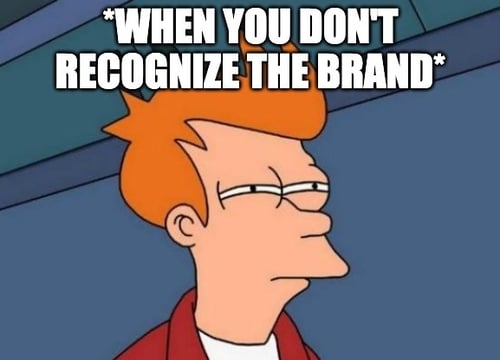
The brands that show up (especially in AI answers) aren’t trying to cover every possible use case. They’re strongly associated with a specific one.
2. Show Up Where People Trust Information
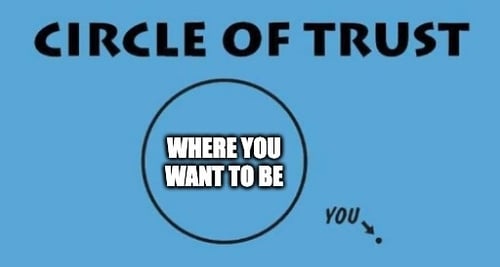
Your website matters, but it’s not the only place your brand is being defined.
Mentions in:
- Industry articles
- Reviews and comparisons
- Roundups and guides
Carry a different kind of weight. They reinforce that your brand exists beyond your own messaging.
And that repetition is what AI models tend to pick up on.
3. Create Content That Sounds Like Real Questions
No one is out here searching: “enterprise-grade scalable solutions for synergistic growth" (If you are searching that, we apologize. You’re likely an anomaly).
They’re asking:
- “What’s the best option for X?”
- “Is X worth it?”
- “X vs Y?”
Content that mirrors how people think and search tends to perform better everywhere.
4. Keep Your Story Consistent
A homepage that says one thing, a sales team that says another…this creates friction.
And confusion is basically the enemy of visibility.
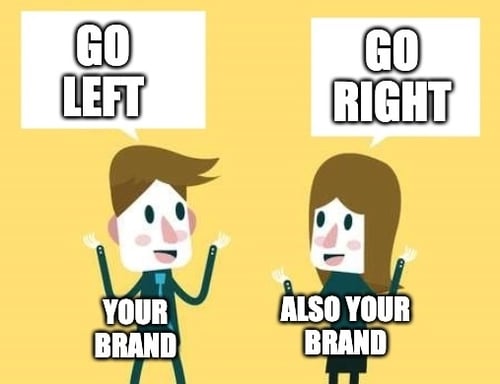
Strong brands sound like themselves no matter where you encounter them.
5. Avoid Obsessing Over Traffic Alone
Traffic is great. We love traffic (but not Chicago traffic, that's gotten out of control).
But in a world where answers are summarized, visibility isn’t just about clicks anymore.
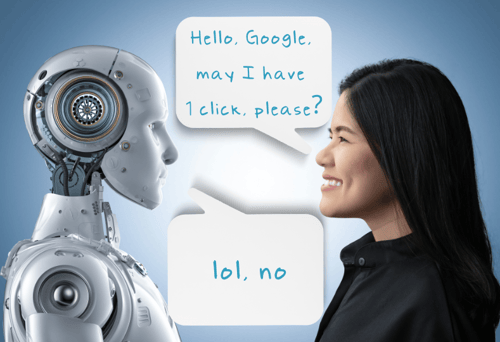
It’s also about:
- Being mentioned
- Being associated with the right use case
- Being part of the conversation before someone ever lands on your site
The brands that win are easy to understand and hard to ignore, regardless of where the search starts.
It’s AI + Google
Plot twist: you don’t have to pick a side.
People are bouncing between both, sometimes in the span of five minutes. AI to get the rundown, Google to go full detective mode. One speeds things up, the other helps people feel sure.

For brands, that’s a pretty great setup. It means more entry points and chances to show up before someone makes a decision.
Need help with either one? BFO’s ready when you are.
We’ll help you tighten your positioning, create content that gets picked up, and make sure your brand shows up in the right conversations.
Reach out anytime. We’d love to jump in!


SUBSCRIBE TO OUR BLOG
Stay up to date with the latest industry best practices in digital marketing!








.png?width=339&height=179&name=Webinar%20Banner%20(1).png)
.png?width=339&height=179&name=July%20Webinar%20(Newsletter).png)
.png?width=339&height=179&name=Webinar%20Banner-April-02%20(1).png)
%20(4).png?width=339&height=179&name=Webinar%20Banner-May-02%20(1)%20(4).png)


.png?width=339&height=179&name=March%202023%20Webinar%20Ad%20(autoresponder).png)

.svg)
.svg)
.svg)
%20(1).svg)
.svg)
.svg)
.png?width=339&height=179&name=2025%20Paid%20Media%20(1200%20x%20628%20px).png)





























.png?width=339&height=179&name=2026%20Paid%20Media%20Ad%20Specs%20(Twitter%20Post).png)

.png?width=339&height=179&name=1%20(3).png)