.png?width=200&height=42&name=%C2%AE%20(200%20x%2042%20px).png)




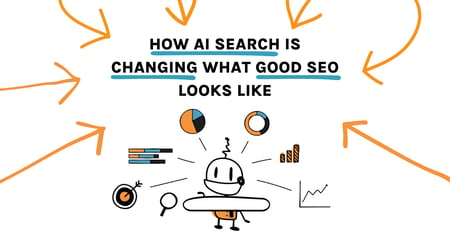
Somewhere along the way, someone decided that AI search had killed SEO. They wrote a LinkedIn post about it, people shared it with a vague sense of dread, then everyone went back to their dashboards wondering if everything they'd built was suddenly worthless.
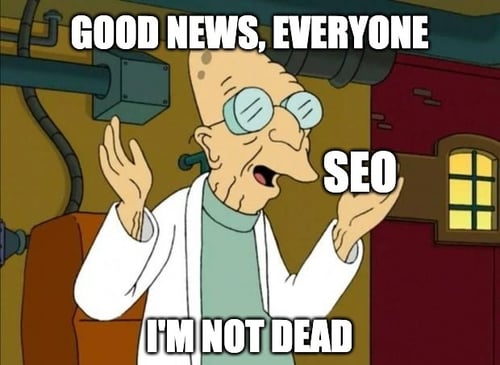
It wasn't, and it isn't. But something did change, and pretending it didn't isn't exactly the greatest strategy.
The more accurate version of what happened: AI search didn't replace good SEO. It raised the bar on what good SEO looks like. The brands that were doing the fundamentals well (i.e., building authority, creating content that helps people, showing up credibly in more places than just their own website) are largely fine. Better than fine, actually, as they're showing up in AI answers because they'd done the work that AI rewards.
The brands that were gaming the system, chasing keywords without building expertise, or treating SEO as a checklist rather than a long-term investment? Those brands are having a tougher time. And not because AI broke their strategy, but because their strategy was always a bit too fragile.
So no, good SEO didn't die. It just got more interesting, and less forgiving. Here's what it looks like now.

What AI Search Changed
Let's start with what shifted, because "AI changed everything" is both true and completely unhelpful.
The most important change is this: ranking used to mean showing up on a list. Now it also means being included in an answer. Those are two fundamentally different things, and they work differently enough that it's worth understanding both.
When someone searches on Google, they get options. Links, snippets, ads, maybe a featured result, but ultimately, they're doing the work. They click, compare, open four more tabs, and decide. Your job as a brand was to show up somewhere on that page and earn the click.
AI search skips most of that. Someone asks a question and gets an answer. One that’s synthesized, confident, and often complete enough that clicking through to anything seems optional. Instead of ten chances to show up, there might be two or three mentions, or none at all.
Which means visibility looks different now too. A buyer can encounter your brand in an AI answer, form an impression, and carry that into the rest of their research without ever landing on your website. That's influence without traffic, and most analytics setups aren't capturing it at all.
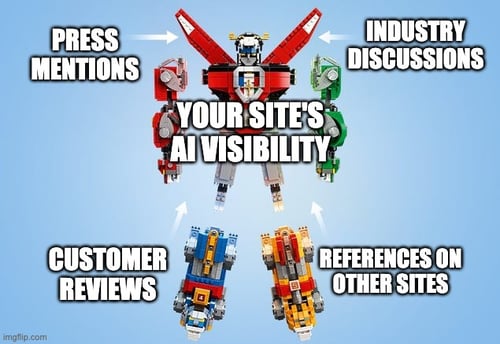
The other thing that changed is what drives those citations. AI isn't ranking brands the way Google ranks pages. It's referencing them, and the brands that get referenced consistently are the ones that have made themselves easy to understand, consistently talked about in credible places, and associated with specific topics or use cases.
That's a different problem to solve, and it requires a slightly different approach.
What Good SEO Used to Look Like
For most of the last decade, the SEO playbook was pretty legible.
You found the keywords your audience was searching for, created content around those keywords, earned backlinks from credible sites to signal authority, and made sure your technical setup was clean enough for Google to crawl and index. Then you watched your rankings, analyzed your traffic, and optimized from there.

The goal was a position. Ideally, the top three results, because that's where the clicks lived. The higher you ranked, the more traffic you got, and more traffic generally meant more opportunity.
For a long time, that was a decent way to run things. Brands that invested in quality content, built authority over time, and kept their technical house in order were rewarded with visibility that compounded. The system wasn't perfect, but it was established. You could see where you stood, track what was working, and adjust accordingly.
The mindset at the center of it all was essentially: win the position, earn the click, get the traffic.
That mindset isn't the whole story anymore. Now there's an entire layer of visibility happening before anyone clicks on anything, and the brands that are only optimizing for the click are missing a massive part of the picture.
What Good SEO Looks Like Now
Good SEO in an AI-first world isn't a completely different discipline. It's the same foundation with a bigger building on top of it.
The brands showing up consistently in AI answers have expanded what good SEO means to them, and a few things that used to be nice-to-haves have become essential.
Topical authority over keyword coverage
Ranking for a handful of keywords was never really the point. It was a proxy for something more important. AI has made it clear that the biggest goal is genuine expertise across a subject area. Not a blog post for every keyword, but deep, well-organized coverage of a topic that signals you know what you're talking about. Reminder: Broad and shallow doesn't cut it anymore.
Content that answers the whole question
People ask AI tools questions the way they'd ask a knowledgeable friend. Content that mirrors that, answering the question rather than dancing around it, tends to perform significantly better in AI-driven search. If a reader has to dig through three paragraphs of preamble to find what they came for, that's a problem.
E-E-A-T more than ever
Experience, Expertise, Authority, and Trust were already central to how Google evaluated content quality. AI leans on the same signals (maybe even harder). Original thinking, cited sources, and content that reflects firsthand knowledge are what separate a reference-worthy source from one that gets skipped.
Structured, organized content
AI needs to be able to navigate your site as much as a human does. Pillar pages with strong supporting content around them, internal linking, and a logical hierarchy make it way easier for AI to understand what your site is about and where your expertise lives.
A presence beyond your own website
This one keeps coming up because it’s true over and over again. AI isn't just reading your site. Instead, it’s reading everything: reviews, third-party articles, industry mentions, comparison guides. The brands that show up well in AI answers have usually built a consistent, credible presence in places they don't own and can't fully control. That outside validation gives AI something to trust beyond the brand's own word.
Technical foundations that AI can read
Schema markup, crawlability, author markup, proper site structure—the unsexy stuff still matters. AI needs to be able to read, parse, and understand your content before it can cite it. A technically messy site makes it harder, no matter how good the content is.
What Hasn't Changed (and Why That's Good News)
Alright, deep breath. After all of that, here's the part that should make you feel good.
Brands that have been doing the basics well aren't starting from scratch. Not even close. In fact, much of what makes brands visible in traditional search does the same job in AI search. The signals just matter in more places now.

Strong content still wins. Useful, well-researched content that helps someone understand something or make a better decision. That has always been the goal, and it remains the goal. AI didn't change what good content is, but it did make mediocre content easier to skip.
Technical health still matters. A fast, crawlable, well-structured site that Google can read easily is also a site that AI can read easily. The investment brands have made in their technical foundation is doing more work in more places than it used to.
Backlinks and credibility signals still count. Third-party sites linking to yours as a credible source was always a good signal, and it still is. AI is looking for the same things a skeptical buyer would look for: proof that other people, not just the brand itself, think this source is worth trusting.
The bottom line is, if you've been doing this right, you’ve got a head start that's worth a lot more than you might think.
What's Getting in the Way for Most Brands Right Now
Most brands aren't doing anything dramatically wrong. They're just making a few transitions slowwwwwly, and in a landscape that's moving fast, slow transitions have a way of becoming real gaps.
Chasing AI-specific tactics before fixing the fundamentals
There's a whole cottage industry of AI SEO tips and tricks right now, and some of them are great. But brands that jump straight to AI optimization without a solid content and technical foundation are essentially decorating a house that hasn't been built yet. The fundamentals still come first.
Building topical depth in one place but not the other
A lot of brands have done good work on their own site, but haven't extended that into the broader web. Since AI is reading everything, a strong website with a thin external presence is only doing half the job. The credibility web matters just as much as the content itself.
Measuring success the old way
Keyword rankings and click-through rates are still useful data points, but if they're the only things on the dashboard, the picture is incomplete. AI visibility, brand mentions, share of voice, and conversion rates tell part of the story that traditional reporting can miss entirely.
Treating AI-SEO as a separate project
This might be the most common one. AI search optimization isn't a new channel to manage alongside everything else. Really, it's an evolution of what good SEO has always been. Brands that treat it as a separate workstream tend to end up with a fragmented strategy that serves neither goal particularly well. Brands doing it right integrate it into everything rather than adding it on top.
Same Foundation, Bigger Building
Now you know you don’t have to throw all of your search efforts out and start over. Start by looking at what you’ve built and extending it into the places that matter now.
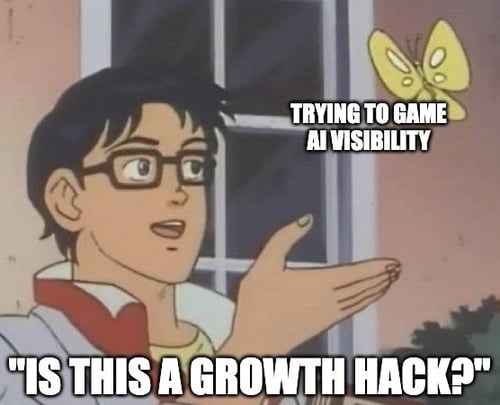
If you're not sure where your gaps are or how your brand is showing up in AI search, that's what BFO is here to help you figure out. We help brands audit what's working, find what's missing, and build the kind of presence that holds up in Google, AI Overviews, ChatGPT, and wherever search goes next. Send us a message to get started!


SUBSCRIBE TO OUR BLOG
Stay up to date with the latest industry best practices in digital marketing!











.png?width=339&height=179&name=Webinar%20Banner%20(1).png)


.png?width=339&height=179&name=July%20Webinar%20(Newsletter).png)
.png?width=339&height=179&name=Webinar%20Banner-April-02%20(1).png)
%20(4).png?width=339&height=179&name=Webinar%20Banner-May-02%20(1)%20(4).png)



.png?width=339&height=179&name=March%202023%20Webinar%20Ad%20(autoresponder).png)



.svg)
.svg)
.svg)
%20(1).svg)
.svg)
.svg)

.png?width=339&height=179&name=2025%20Paid%20Media%20(1200%20x%20628%20px).png)






























.png?width=339&height=179&name=2026%20Paid%20Media%20Ad%20Specs%20(Twitter%20Post).png)

.png?width=339&height=179&name=1%20(3).png)