.png?width=200&height=42&name=%C2%AE%20(200%20x%2042%20px).png)




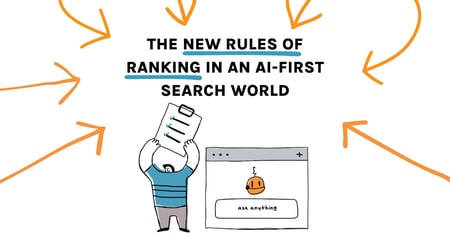
Search has been doing some things differently lately.
For years, the goal was pretty obvious: write good content, earn some authority, and climb until you were sitting comfortably at the top of page one. Brands built entire strategies around it, and honestly, it worked well.
Then AI search came along and shook up the whole thing.

Getting found now isn't just about ranking on a page but being the answer someone gets before they ever click on anything. That's a different problem, and it requires some new thinking.
Luckily, you don’t need to blow up everything you've built, since a lot of what makes brands visible in traditional search still matters. Here's what's changed, what hasn't, and what to do about both.

What Ranking Means Now
For most of search's existence, ranking meant one thing: a spot on a page that someone might click on. The higher the spot, the better the odds.
That's still part of it, but it's not everything anymore.
AI search has introduced a different kind of visibility, where your brand gets referenced in a generated answer instead of listed as a result. Someone asks ChatGPT a question, and your brand comes up in the response. Someone searches on Google, and an AI Overview summarizes the landscape before they've clicked a single link.
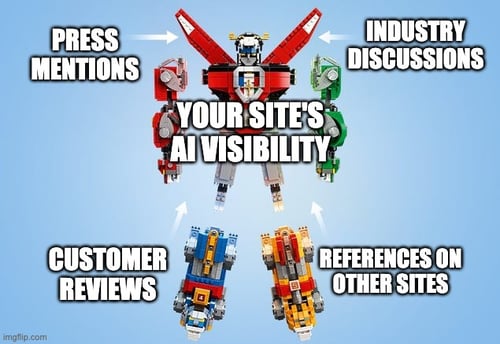
In those moments, your brand is being cited. So the new question is: how do we become the kind of brand that gets referenced?
The Old Rules That Still Apply
Before we get into what's new, let's take a second to appreciate what isn't, because a lot of the fundamentals are still pulling their weight.
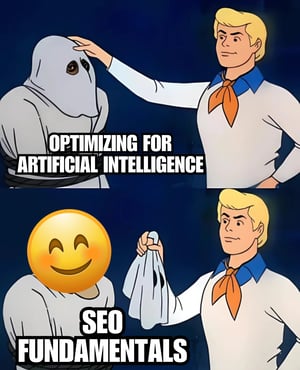
Content quality and depth
Surface-level content that skims a topic was never great, and AI has even less patience for it than Google did. Thorough, well-researched content that covers a subject is still one of the best signals of topical authority, which is what AI looks for when it decides who to reference.
Technical SEO and site health
Crawlability, site speed, schema markup, proper indexation, all of these are still very much required. AI needs to be able to read and understand your content before it can cite it, and a technically sound site makes that easier. The unglamorous stuff counts.
Topical authority
A few blog posts on a subject does not an authority make (we hope you read that in your best Yoda voice). Consistent coverage of a topic over time is what signals expertise to search engines and AI alike. There aren’t any shortcuts here.
E-E-A-T signals
Experience, Expertise, Authority, and Trust were central to how Google evaluated content quality. Turns out AI cares about the same things. Original thinking, clear authorship, and credible sourcing all still matter.
A strong backlink profile
Third-party sites linking to yours as a credible source is still a fantastic signal. AI pays attention to who the internet considers trustworthy, and links are part of that picture.
The brands with strong SEO foundations tend to earn AI visibility faster than brands starting from scratch, as their signals are doing more work in more places.
The New Rules That Matter
Now for the stuff that's different. Reminder: These aren’t replacements for the fundamentals, but additions.
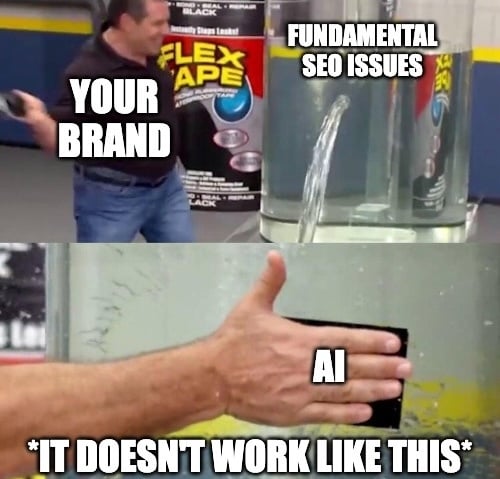
Be known for something specific
Generalist brands are hard for AI to summarize and easy to leave out of answers. The brands that get referenced consistently tend to be associated with a specific use case, audience, or area of expertise. Trying to be everything to everyone works against you here. Picking a lane and owning it is the way to go.
Develop credibility beyond your own website
Your website is a great starting point, but AI is reading everything: reviews, third-party articles, industry mentions, comparison guides, Reddit, etc. The brands that show up well in AI answers have a credible presence across a lot of those places. Your owned content is one piece of a much bigger puzzle.
Structure your content like AI reads it
Content that's organized around topics rather than individual keywords is a lot easier for AI to navigate and reference (think pillar pages, topic clusters, hierarchy, internal linking). If your site is a collection of loosely related posts, that's worth rethinking.
Use schema markup and technical signals
Schema markup helps AI systems read, parse, and understand your content more accurately. Author markup, publish dates, FAQ schema, and product markup are signals that help AI figure out what your content is about and whether it's worth referencing.
Write like a human is asking the question
Nobody is searching "best enterprise solutions for scalable synergy." They're asking "what's the best option for X" or "how do I solve Y." Content that mirrors the way people ask questions tends to perform better in AI search than content written to match keywords.
What This Means for Your Content Strategy
If your content strategy was built primarily around keywords and page rankings, it might be time for a shift in how you think about it.

Here's what that looks like in practice:
- Think topics, not keywords. AI rewards brands that demonstrate expertise across an entire subject area. Pillar pages with supporting content around them beat a random collection of posts every time.
- Write for the question. People ask AI tools questions the way they'd ask a knowledgeable friend. Content that mirrors that performs a lot better than content written to match a keyword.
- Go deep on what you already have. A comprehensive, well-maintained piece of content earns more trust than ten thin posts that each touch on the same topic briefly. Existing content that could be improved is the highest-leverage place to start.
- Bring a fresh point of view. AI has access to plenty of generic content. Original thinking, opinions, and expertise are what stand out and earn citations.
- Get it out into the world. Publishing is only part of the job. Getting your content picked up, referenced, and mentioned in places your buyers trust is what turns good content into a good signal.
Measurement Is Different Now Too
Here's where things get a little uncomfy for anyone who loves a polished dashboard.
The metrics that used to tell the whole story (keyword rankings, click-through rates, organic traffic) still matter. However, they don't capture everything that's happening in an AI-first search world.
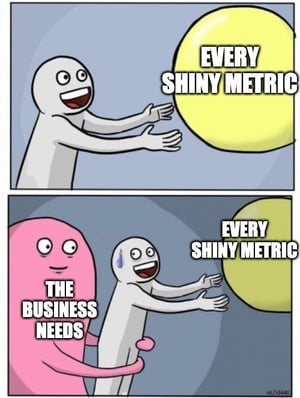
A buyer can encounter your brand in an AI answer, form an opinion, and carry that into their decision without ever showing up in your analytics. That's visibility. It's just invisible visibility, which is a fun problem to have.
So what metrics should you pay attention to?
- Brand mentions and citations. How often is your brand showing up in AI-generated answers, industry content, and third-party sources? This is a signal worth tracking even when it doesn't come with a direct click.
- Share of voice. Are you part of the conversation in your category, or are competitors consistently showing up in the places you're not?
- Conversion rates. Traffic that converts is worth a lot more than traffic that doesn't. As click volumes shift in an AI world, the quality of the visits you do get becomes more important than the quantity.
- AI Overview presence. Which of your pages are being pulled into AI Overviews? Which topics are generating citations? This is newer territory for reporting but increasingly worth monitoring.
- Brand sentiment. How is your brand being described and perceived across the web? AI picks up on this. A positive brand presence across sources reinforces the signals that lead to citations.
There’s no need to throw out your existing reporting, but make sure your reporting reflects the full picture of where visibility is happening now.
Same Game, New Rules
The brands winning in AI search are the ones who took what they'd already built and extended it into the places that matter now.
The game is the same in a lot of ways. Be clear, credible, and consistent, and show up where your buyers are looking.

If you're not sure how your brand is showing up in AI search right now, or whether your current strategy is set up to keep pace with where things are headed, that's the kind of thing BFO loves to dig into. Send us a message anytime!


SUBSCRIBE TO OUR BLOG
Stay up to date with the latest industry best practices in digital marketing!












.png?width=339&height=179&name=Webinar%20Banner%20(1).png)


.png?width=339&height=179&name=July%20Webinar%20(Newsletter).png)
.png?width=339&height=179&name=Webinar%20Banner-April-02%20(1).png)
%20(4).png?width=339&height=179&name=Webinar%20Banner-May-02%20(1)%20(4).png)



.png?width=339&height=179&name=March%202023%20Webinar%20Ad%20(autoresponder).png)


.svg)
.svg)
.svg)
%20(1).svg)
.svg)
.svg)

.png?width=339&height=179&name=2025%20Paid%20Media%20(1200%20x%20628%20px).png)





































.png?width=339&height=179&name=2026%20Paid%20Media%20Ad%20Specs%20(Twitter%20Post).png)

.png?width=339&height=179&name=1%20(3).png)