.png?width=200&height=42&name=%C2%AE%20(200%20x%2042%20px).png)




Somewhere between your last touchpoint and their next response, your buyer is living a whole life you know nothing about.
They're…
- Asking ChatGPT to compare you to three competitors
- In a meeting where someone brought up a concern that never made it back to you
- In a group chat with a colleague who worked with someone like you five years ago and has ~thoughts~
Unfortunately, none of this shows up in your CRM, yet all of it is shaping what happens next.

The gap between touchpoints might seem like downtime for high-consideration buyers, but really, it’s prime time. Here’s what’s going on in there and what your brand can do about it.
The Myth of the Linear Buyer Journey
Somewhere along the way, marketing fell in love with the idea of the funnel. Awareness, consideration, decision. Neat little stages, one leading into the next, everybody moving at a reasonable pace.
It's a nice idea, but not all buyers operate that way.
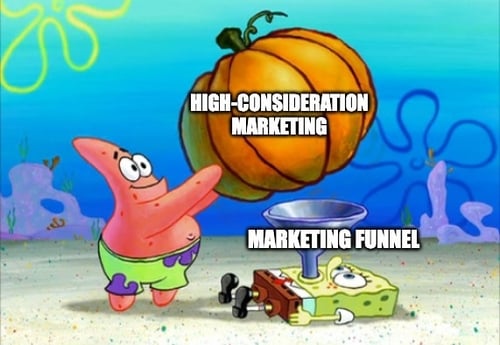
High-consideration purchases have a journey that looks a lot less like a funnel and a lot more like a browser with forty tabs open, half of which have been sitting there for two weeks. Buyers jump around, go quiet for a stretch, and come back with a whole new set of questions. Sometimes they circle back to a competitor they crossed off the list weeks ago just to make sure they're not missing something.
This is what happens when a decision carries serious weight. The bigger the stakes, the more a buyer needs to feel sure before they commit, and getting there isn't a straight line for most people.
What Buyers Are Doing
So what exactly is happening in those gaps? Quite a bit, as it turns out.
They're talking to people they trust
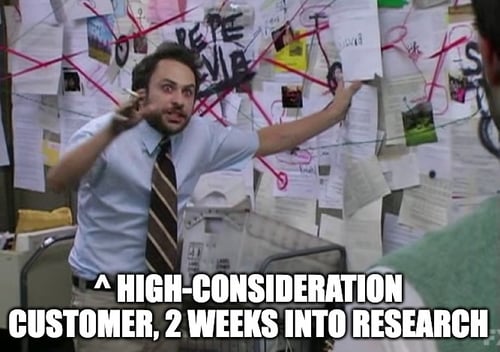
Somewhere right now, your buyer is texting or Slacking a colleague something like "Okay, but have you heard of these guys?" The people they trust most, like a manager, a peer who's been through something similar, or one friend who seems to know every vendor in the space, are being consulted. These conversations are unfiltered and carry more weight than anything in your sales deck.
They're asking AI what it thinks
Yeah, really. AI platforms like ChatGPT have become research assistants, and buyers have noticed. They're using them to compare options, stress-test what they've heard, and get answers to the questions they're not ready to ask you directly yet. Whatever AI says about your brand in those moments is doing work on your behalf (or someone else's!). More on how you can influence what AI says about your brand here.
They're deep in third-party content
Reviews, comparison guides, industry roundups, that one Reddit thread from three years ago that somehow keeps surfacing. Buyers want to know what people who have nothing to gain are saying about you. This content exists with or without your involvement, which is why it seems trustworthy to them.
They're trying to sell it internally
One thing brands often forget: your buyer has to convince other people too. They're fielding questions from stakeholders, building the case in meetings you'll never be in, and hoping they have good enough answers to keep things moving. If you've made that easy for them, they love you for it. If you haven't, you just might get ghosted.
They're waiting for it to feel like the right time
Not because anything is wrong. Sometimes, decisions just need a moment to settle. Luckily, something can nudge the timing, which we’ll get into below.
Where AI Fits Into the In-Between
At some point in the last couple of years, AI tools became one of the first places buyers go when they're trying to figure something out. They’re asking things like:
- How does this compare to the other option I'm considering?
- Is this worth the investment?
- What do people say about working with them?
- What should I be asking before I commit to anything?

AI is out there answering all of these, and the brands that show up well in those answers are getting a meaningful head start before the next conversation happens. Here’s how your brand can do so.
The Trust Erosion Problem
Buyer confidence is kinda like a houseplant. Leave it alone long enough without the right attention, and it starts to droop in ways that are entirely preventable.
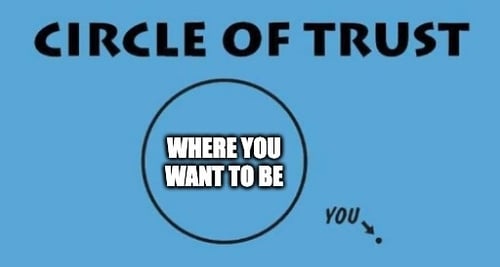
A buyer who was excited after your last conversation might feel much less certain two weeks later, not because anything went wrong, but because a lot can happen in two weeks:
- A competitor showed up at the right moment
- Someone internally raised a concern that didn't have a clean answer
- They found a piece of content from another brand that clicked
Or honestly, they just had more time to think about it, and thinking sometimes leads to second-guessing. We've all been there.
The stuff that erodes trust between touchpoints is rarely dramatic. It's small things, like a follow-up that felt more like a push than anything useful or a gap in the conversation that stretched too long. None of it is a dealbreaker on its own, but together, it adds up to a buyer who was warm and is now lukewarm, which is a much harder place to work from.
What Brands Can Do About It
The in-between is very much workable. This is how you can tackle it.

Show up where buyers go when they're not on your site
Your website is great, but it's not where buyers are spending most of their research time. Reviews, industry publications, comparison sites, AI tools—these are the places doing a lot of the heavy lifting during the gaps. A strong presence in those spots means your brand is working when you're not actively selling.
Create content that answers the questions buyers are asking without you
Think about the conversations happening in that group chat we mentioned earlier. The questions a colleague is asking, or the things a buyer is typing into ChatGPT at 9pm. Content that speaks honestly to those moments is incredibly useful during the in-between.
Give buyers something to do
Not every follow-up needs to push toward a decision. A relevant resource or a low-stakes next step that keeps things moving without adding pressure can keep buyers engaged without making them feel like they're being chased.
Equip your internal champion
Your buyer is doing real sales work on your behalf inside their organization, so make it easy for them. A summary of the value story, answers to the questions most likely to come up, or something that helps them walk into an internal meeting feeling prepared matters more than most brands realize.
Stay consistent
If your messaging sounds different depending on where a buyer finds you, that gap registers even if they can't name it. The brands that maintain consistency across touchpoints tend to sound like themselves everywhere, including on their site, in their follow-ups, in third-party content, and in AI answers. Consistency is boring to talk about, yet powerful in practice.
The Content That Does the Best Work Here
Not all content pulls equal weight during the in-between. Here's what moves the needle when buyers are in research mode and you're not in the room.

- Third-party validation. Reviews, earned media, and industry mentions carry more weight than anything you say about yourself, and they're exactly what AI leans on too.
- Comparison content. Buyers are going to compare you to other options regardless, so content that does that honestly and specifically tends to build more trust than anything that just says you're the best.
- Specific outcome stories. A clear, concrete story about a company that looks a lot like theirs gives buyers something to hold onto and something to bring into an internal conversation.
- Content built around questions. Whatever your buyer is typing into ChatGPT or Google when they're not talking to you, there should be something on your end that answers it well.
Think of it this way: the best content doesn't wait around for the next sales call. It's out there doing the work while your buyer is in a group chat and scrolling after hours. Be there for that moment.
The In-Between Is Where Deals Are Won or Lost
For high-consideration buyers, a lot of the most important thinking, comparing, and deciding is happening in those gaps.
The brands that figure this out stop treating the in-between as dead air and start treating it as an opportunity. Show up in the right places and make it easy for buyers to keep feeling good about their decision even when nobody's actively selling.
If you're not sure whether your brand is showing up well during the in-between, that's a great place to start. BFO can help you figure out where the gaps are and what to do about them. Send us a message anytime!


SUBSCRIBE TO OUR BLOG
Stay up to date with the latest industry best practices in digital marketing!


















.png?width=339&height=179&name=Webinar%20Banner%20(1).png)


.png?width=339&height=179&name=July%20Webinar%20(Newsletter).png)
.png?width=339&height=179&name=Webinar%20Banner-April-02%20(1).png)
%20(4).png?width=339&height=179&name=Webinar%20Banner-May-02%20(1)%20(4).png)



.png?width=339&height=179&name=March%202023%20Webinar%20Ad%20(autoresponder).png)





.svg)
.svg)
.svg)
%20(1).svg)
.svg)
.svg)

.png?width=339&height=179&name=2025%20Paid%20Media%20(1200%20x%20628%20px).png)











































.png?width=339&height=179&name=2026%20Paid%20Media%20Ad%20Specs%20(Twitter%20Post).png)

.png?width=339&height=179&name=1%20(3).png)