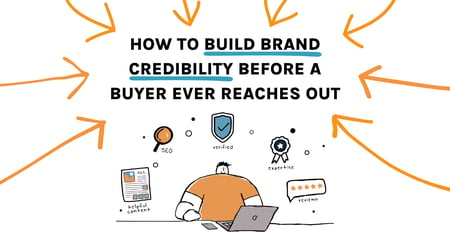
By the time a buyer reaches out to your brand, they've done a lot of deciding.
They've visited your website more than once, read a review or two, and probably typed your name into ChatGPT to see what comes back. They've also compared you to at least one competitor and formed an opinion about whether your brand is the right call, all before a single conversation has happened.
Through all of that, they've been building a picture of your brand. Not from anything you told them directly, but from every signal, mention, piece of content, and outside reference they stumbled upon along the way. By the time they fill out your contact form or send that first email, they've mostly answered the credibility question in their head.
Your response time, pitch, and beautifully designed proposal are all working with whatever foundation was laid during those research moments you weren't part of.
Which means the brands that win high-consideration decisions are the ones who showed up most credibly before it ever started. Here's how to be one of them.
What Credibility Means in a High-Consideration World
Credibility sounds like one of those words that everyone agrees matters, and nobody really defines. So let's be specific about what it means for a high-consideration buyer, because it's different than for someone buying a $30 thing they found on TikTok Shop.
For a low-stakes purchase, credibility is basically just "...this seems legit." The website is up, the reviews exist, and the checkout works. That's enough.
However, high-consideration buyers are operating on a different level. These are decisions that involve more money, other people's opinions, and the possibility of being the person who greenlit something that didn't work out. So they're not looking for a brand that seems trustworthy but a brand they're 100% confident choosing.
The way they build that confidence isn't through any single interaction. Instead, it’s through everything they encounter across the entire research journey (more on this below). Credibility is less a thing you build and more a feeling that accumulates.
Your Website Is a Credibility Test
Your website has one job when a high-consideration buyer lands on it: make them feel like they made the right call by showing up.

When someone finds their way to your homepage, they've usually encountered your brand somewhere else, like a review, an AI answer, or a colleague who said your name in a meeting. They arrived with a question forming: does this live up to what I've heard? The homepage has about thirty seconds to answer it before they've decided and moved on.
What passes that test:
- Clear positioning that tells them immediately what you do and who you do it for
- Proof that's specific enough to mean something
- Navigation that doesn't make them work for the info they came to find
- A tone that reads like a real brand rather than a marketing template someone downloaded from the internet
What fails it:
- Vague language that could belong to a hundred different companies
- Important information buried three clicks deep
- Testimonials that sound like they were approved by a committee before anyone was allowed to read them
None of it is a dealbreaker on its own, but small amounts of doubt compound in a high-consideration decision. Your website is rarely the first impression, but it's almost always where buyers decide whether to keep going.
What Other People Say Matters More Than What You Say
Nobody trusts a brand that only has great things to say about itself. And honestly, fair enough, of course you think you're great! That's not the information buyers are looking for.
What they're looking for is what everyone else thinks. The review from a customer who had no reason to be generous, or the mention in an industry publication that didn't get paid to say it. These things carry a bigger weight than anything you publish on your own website, and high-consideration buyers know the difference.
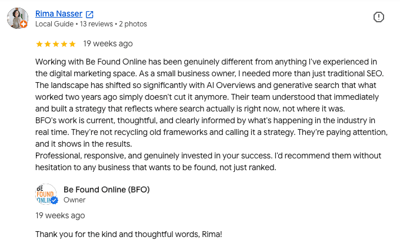
Luckily, building a strong third-party presence is in your control. Here’s what you can do:
- Make it easy for happy customers to leave specific reviews.
- Pursue mentions in the publications your buyers read.
- Build case studies that are specific enough that a prospective buyer can see themselves in them.
- Show up in the conversations happening in your industry even when those conversations aren't happening on your own platforms.
Brands that do this well develop a credible presence that works for them around the clock in places they don't own, at moments they'll never see, with buyers deciding whether to reach out.
Showing Up in the Right Places
Credibility is built everywhere your buyers go during research, and for high-consideration buyers, that's a lot of places.
Think about the journey. They're reading comparison articles on other sites, browsing review platforms, and asking AI tools questions about your category. They're scrolling LinkedIn, reading industry publications, and occasionally falling down a Reddit rabbit hole at 10pm trying to get an unfiltered take from people who've been through the decision.
If your brand shows up well in those places, that builds credibility while you sleep. If it doesn't show up at all, or shows up inconsistently, that's a gap that's costing you deals you never knew were in play. The brands that win high-consideration decisions tend to have a presence that extends well beyond their own website, not because they're everywhere all the time, but because they've been intentional about showing up in the places their buyers go when they're figuring out who to trust.
Consistency Is Also a Credibility Signal
Buyers are picking up signals from a handful of places before they reach out, and one of the most powerful credibility signals isn't what you say, but whether you say the same thing everywhere you say it.
This is surprisingly hard to pull off. A few places where inconsistency tends to sneak in:
- A website that was written two years ago and never updated after the rebrand
- A LinkedIn bio that tells a slightly different story than the homepage
- A sales deck with a value proposition that doesn't match what the marketing says
- An email signature linking to a case study that uses language from a campaign nobody runs anymore
None of these seem like a big deal in isolation. But a buyer who encounters three or four of them across a research journey starts to get a hard-to-name feeling that something is off. That feeling makes a buyer hesitate just long enough to take a closer look at a competitor.
Brands that consistently earn buyer confidence tend to sound like themselves everywhere. Consistency isn't the most exciting thing to optimize for, but in a high-consideration decision where buyers are looking for reasons to be sure, it's one of the most powerful things a brand can get right.
The AI Factor
This is the newest wrinkle in the credibility conversation, and it's a big one.
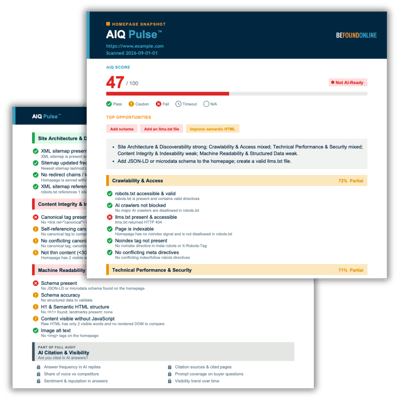
A growing number of buyers are now making a pit stop in ChatGPT or Perplexity before they land on your website. They're asking things like "who are the best options for X" or "what do people say about Y" and getting synthesized, confident answers back in seconds. AI has essentially inserted itself into the research journey as an unofficial credibility referee.

For brands that have done the work (consistent messaging, strong third-party presence, expertise across their category, etc.), AI tends to reflect that back relatively accurately. For brands that haven't, AI fills in the gaps with whatever it can find, which might be outdated, thin, or just not the story you'd tell about yourself.
The silver lining is that there's no separate AI credibility strategy to build. Every review you earn, third-party mention you accumulate, and piece of content that demonstrates expertise is feeding the same signal. More on how to help AI write your brand story in here.

The Work Happens Before They Reach Out
So no, you don’t need the slickest pitch or biggest budget to win high-consideration brands. But you do need to make your buyers feel confident long before they pick up the phone or fill out a form.
That confidence comes from showing up consistently and credibly across every place a buyer goes during research, until the decision to reach out seems less like a leap and more like an obvious next step.
Remember: none of this requires starting over. It requires paying attention to the signals you're putting out into the world and making sure they're telling the right story in the right places. If you're not sure whether they are, that's exactly the kind of thing BFO loves to dig into. We work with high-consideration brands to build credibility that holds up across a long, complex buying journey and makes buyers feel confident they're making the right call before they ever say hello. Reach out today to get started!


SUBSCRIBE TO OUR BLOG
Stay up to date with the latest industry best practices in digital marketing!